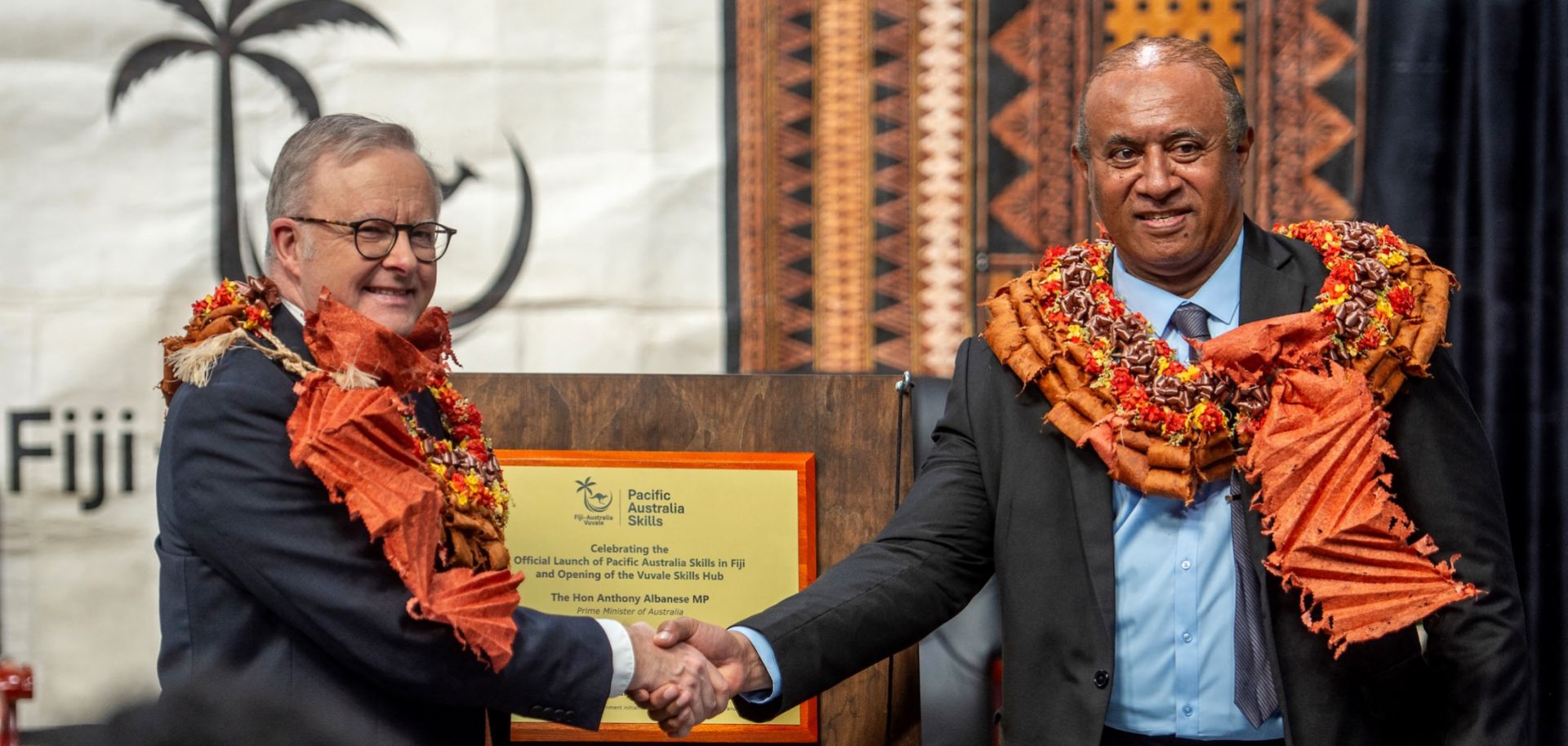
Australia's new pacts with Fiji and Vanuatu strengthen regional barriers to Chinese military access, but China's Pacific missile test shows it can project power without local basing, while island governments' financing, infrastructure and policing needs will continue giving Beijing space to build influence. On July 6, Australian Prime Minister Anthony Albanese and Fijian Prime Minister Sitiveni Rabuka signed the Ocean of Peace Alliance, committing each country to aid the other if attacked and making Fiji Australia's fourth formal military ally after the United States, New Zealand and Papua New Guinea. The treaty requires Australia and Fiji to consult on security threats, act to meet common dangers and allows other Pacific countries to join if they can advance the agreement's purposes and contribute to Pacific security. Australia and Fiji also signed the separate Vuvale Union, backed by about $693 million in Australian investment over the next decade, to expand cooperation on...