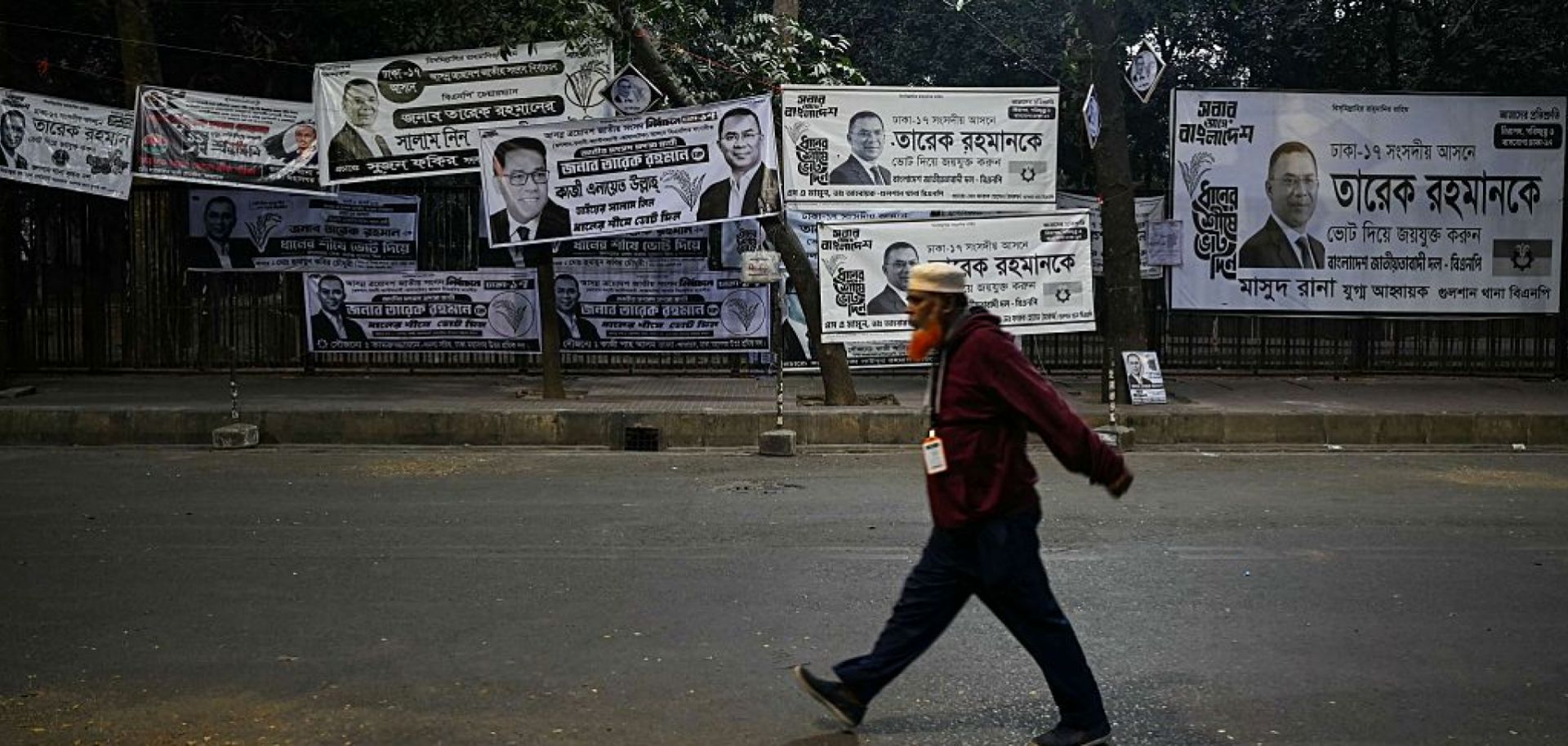
The Bangladesh Nationalist Party's election victory will strengthen political stability, while its legislative supermajority will enable the party to advance constitutional and economic reforms and pursue a foreign policy that balances ties with India and China; however, social and fiscal pressures will constrain its efforts to reform the country in the wake of the 2024 revolution. On Feb. 13, the center-right Bangladesh Nationalist Party (BNP) announced that it won Bangladesh's Feb. 12 parliamentary elections, positioning its leader, Tarique Rahman, the son of the late former Prime Minister Khaleda Zia, to assume the premiership. As of Feb. 13, the Election Commission had not yet published the official results, but several local media outlets report that the party surpassed the 151-seat threshold needed for a simple majority in the 350-member parliament, winning an estimated 209 general seats that, when combined with seats allocated after results are confirmed, give the BNP a two-thirds...