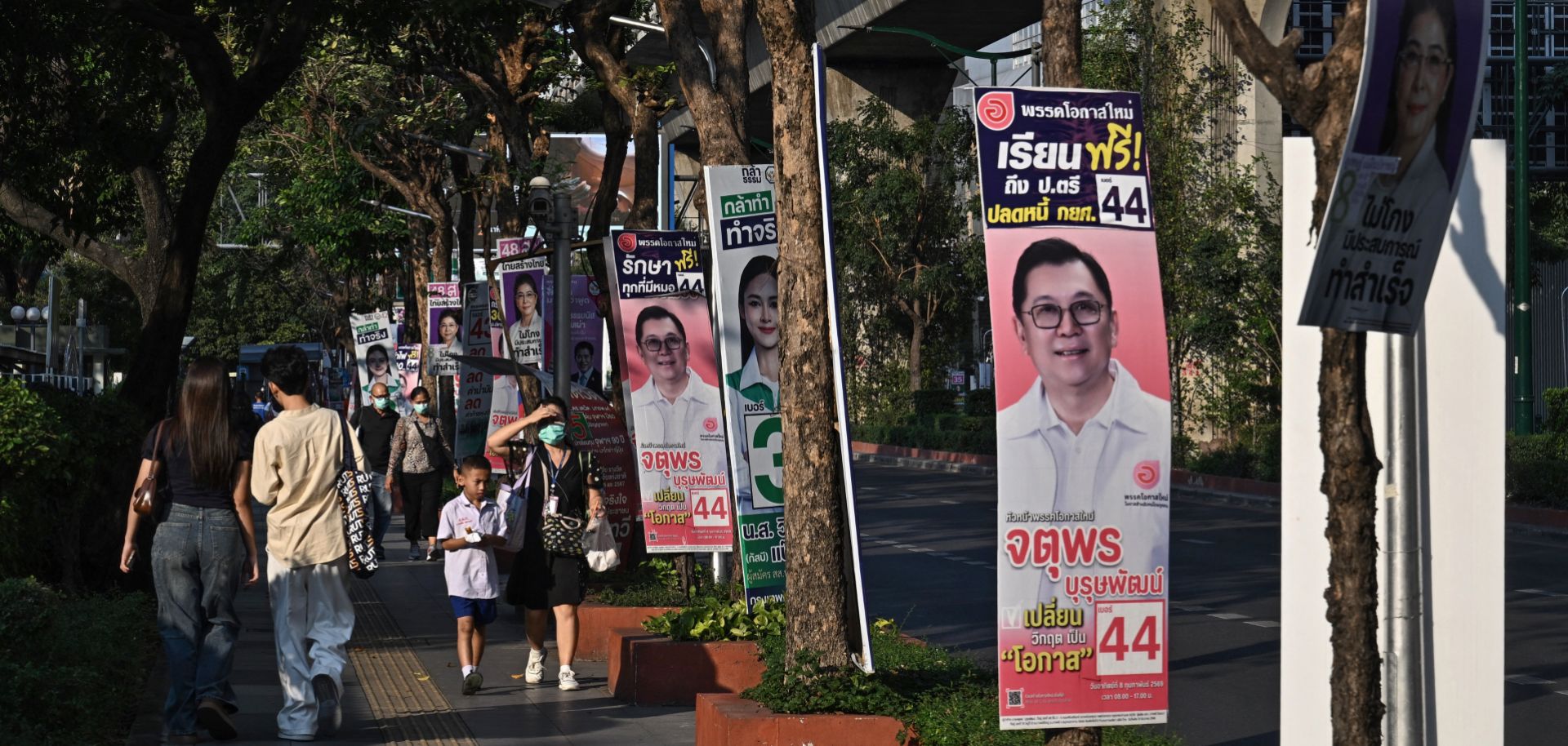
Thailand's general election and constitutional referendum are unlikely to deliver a decisive political reset and will instead risk extending a familiar cycle of contested governance, constrained reform and policy caution amid heightened security pressures and economic underperformance. On Feb. 8, Thailand will hold a general election for the 500-seat House of Representatives and a national referendum on whether to initiate the drafting of a new constitution to replace the 2017 charter. Under Thailand's parallel voting system, 400 members of parliament will be elected from constituencies and 100 from party lists. Forming a government will require the support of at least 251 lawmakers to select a prime minister. The election is being contested primarily by three major political blocs: a progressive and reformist camp led by the People's Party, center-right forces aligned with the governing Bhumjaithai Party and the established political network of the center-left Pheu Thai Party, which advocates redistributive...