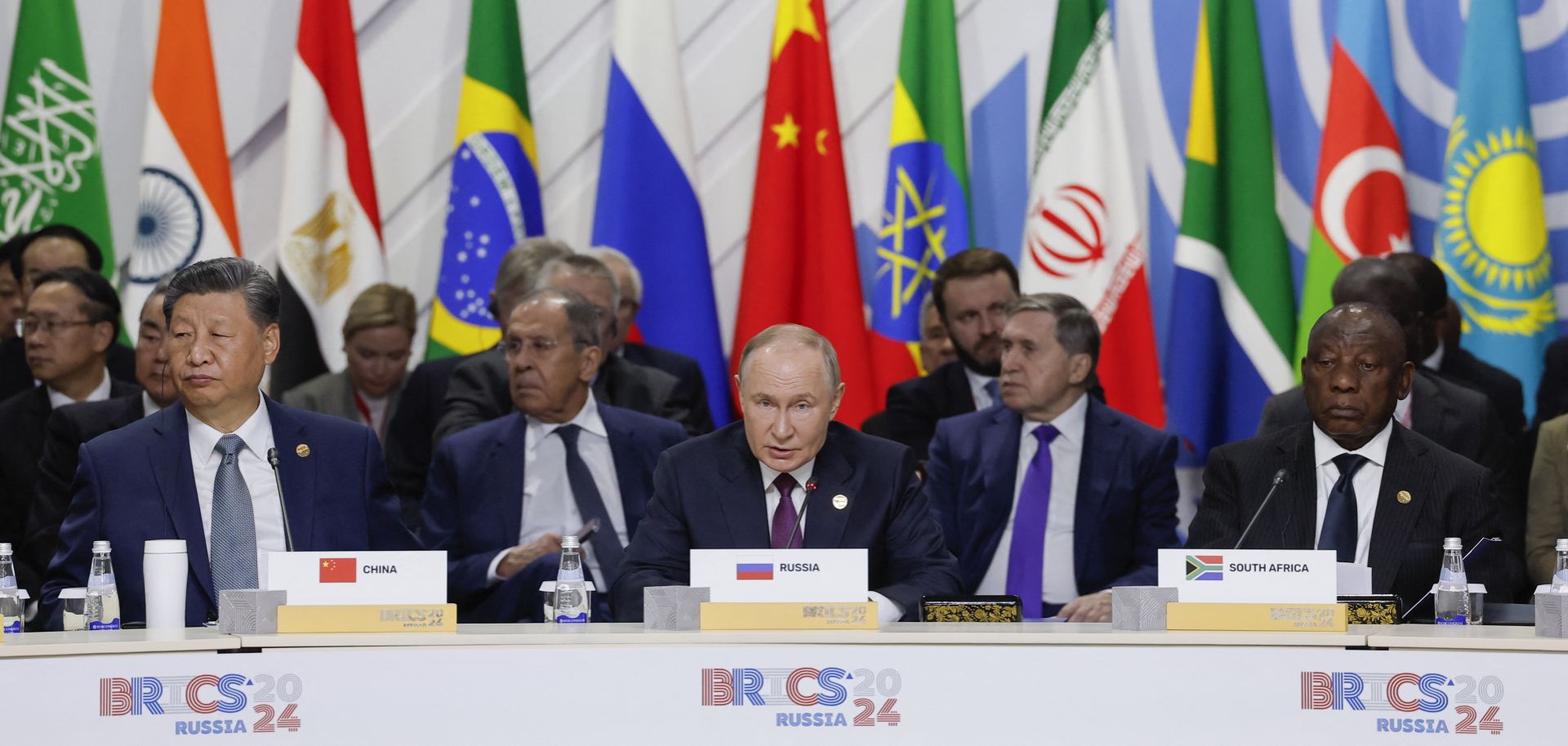
BRICS nations' push to develop an independent payment system will not immediately undermine the U.S. dollar's global dominance, though it could reduce the effectiveness of U.S. financial sanctions. BRICS countries (which currently include Brazil, Russia, India, China, South Africa, Egypt, Ethiopia, Iran, and Saudi Arabia) are working to reduce their dependence on the U.S. dollar and to make themselves less vulnerable to U.S. financial sanctions. At the 2024 BRICS summit, the member states agreed to pursue policies to reduce their reliance on the dollar by building cross-border payment infrastructure and promoting local-currency settlement. Being the target of wide-ranging Western financial sanctions, Russia has for years been pushing for de-dollarization, but more recently, other countries like China and India have also been keen to reduce their dependence on the dollar....