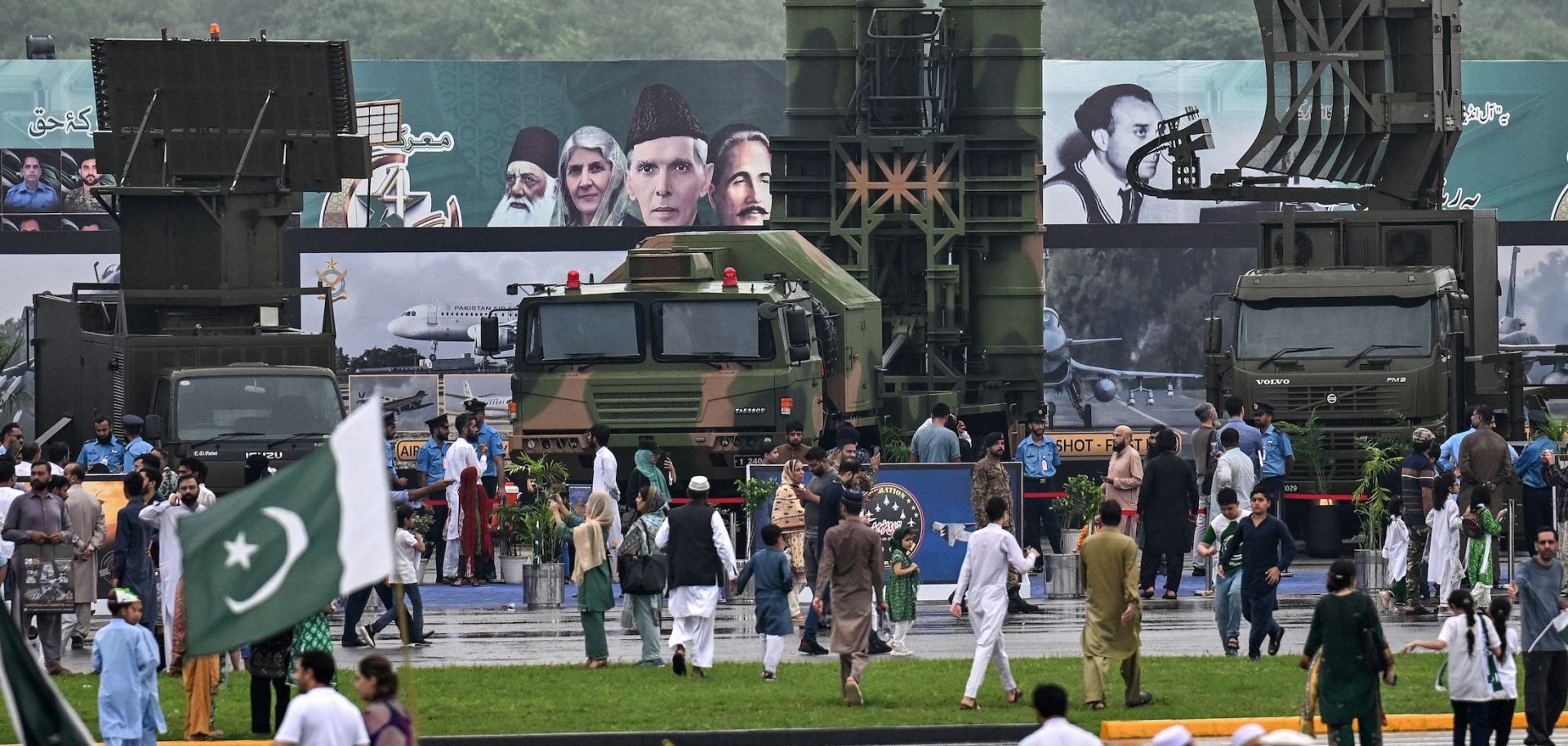
Pakistan's recent defense partnerships signal its intent to become a more consequential Middle Eastern security provider and leverage its military capabilities for economic and strategic gains, though deeper commitments will likely strengthen the military's domestic influence and increase Islamabad's exposure to regional conflicts and wider geopolitical tensions. Pakistan has recently deepened its defense relationships with Middle Eastern states through several bilateral and multilateral initiatives. Most notably, Saudi Arabia, Pakistan and Turkey signed a trilateral mutual defense agreement on Aug. 7, under which an attack on either country would be treated as an attack on both. Separately, Pakistan and Saudi Arabia signed a Strategic Mutual Defense Agreement in September 2025 that extends the same collective-defense principle across all three countries. Pakistan and Kuwait, meanwhile, signed a more limited defense cooperation agreement in June 2023, which Kuwait ratified in July 2026. The agreement establishes a five-year framework covering military training, joint exercises,...