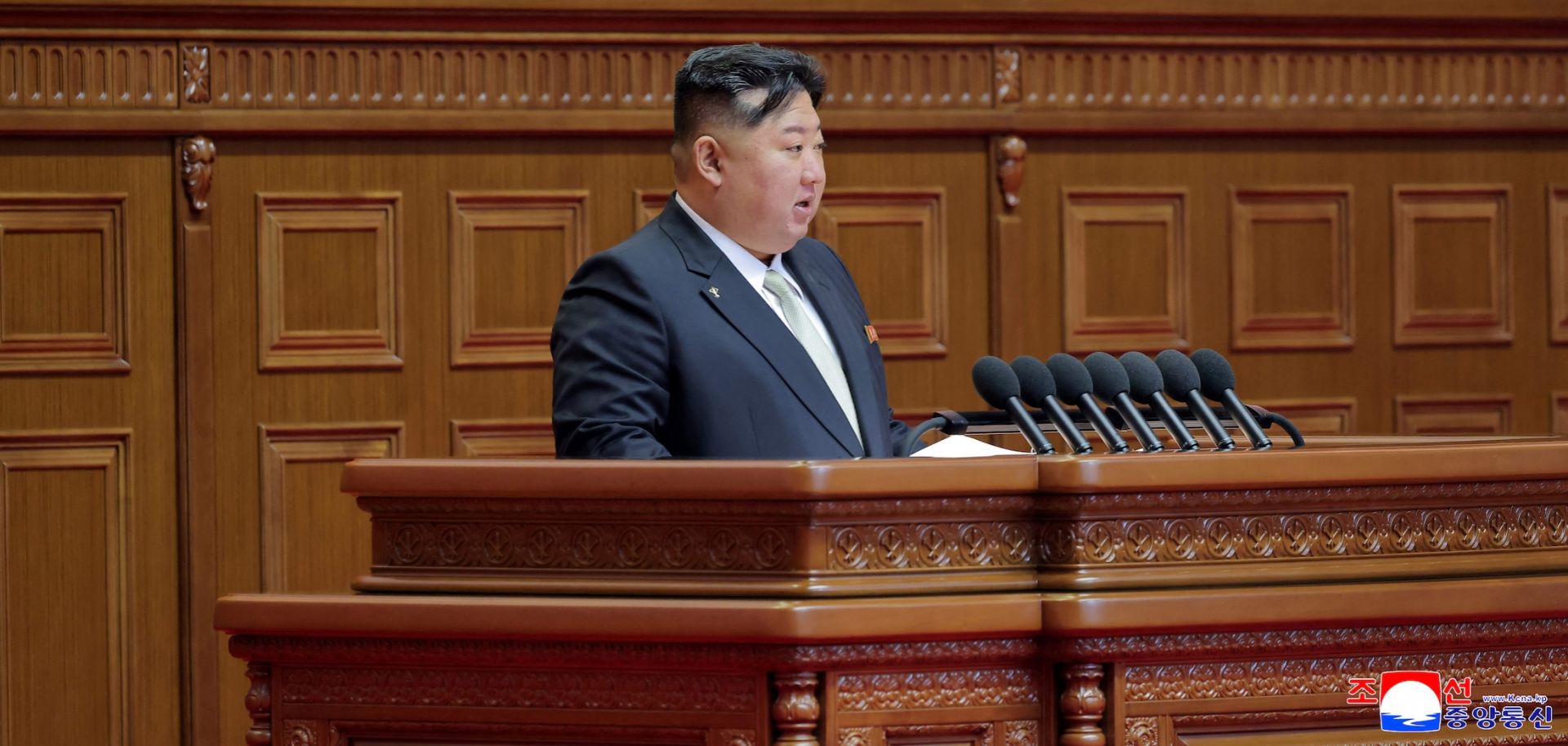
A key party meeting highlights a rare opportunity for North Korea to engage diplomatically with Russia and the United States, and to a lesser extent China and South Korea, to help overcome its economic isolation, though the low risk of military clashes on the peninsula will persist. On Feb. 26, North Korea's dominant Workers' Party of Korea (WPK) concluded its quinquennial Party Congress, which spanned seven days in Pyongyang. Supreme Leader Kim Jong Un was re-elected as general secretary of the WPK in an entirely predetermined voting process, ostensibly extending his already 14-year reign by another five years. Kim also replaced 52% of members of the WPK's Central Committee, the primary decision-making body for the party in the central government, along with 79% of alternate members, unusually high shares for a congress. Most of the replacements were technocrats and party members who rose up in the ranks of the WPK...